Lauren Tschirhart | September 13th, 2026 | M/V Osprey | 11:00 am
For the last several years, San Juan Safaris has partnered with Island Rec to get San Juan Island locals out on the water to see the beautiful wildlife that surrounds their home. Coincidentally, our tour today ended up completing a circumnavigation of San Juan Island… How fitting!
The M/V Osprey departed Friday Harbor and headed south. We made a stop just south of Turn Rock to view some hauled our harbor seals and a sea otter! The sea otter definitely stole the show as we saw it actively foraging and watched it successfully consume two distinct prey items. First we watched as this otter placed a rock on its belly and banged clams against it, breaking open the bivalves to retrieve the yummy meat inside. After this otter consumed several clams, it went on a deep dive. A few moments later we observed it surfacing with a crab.
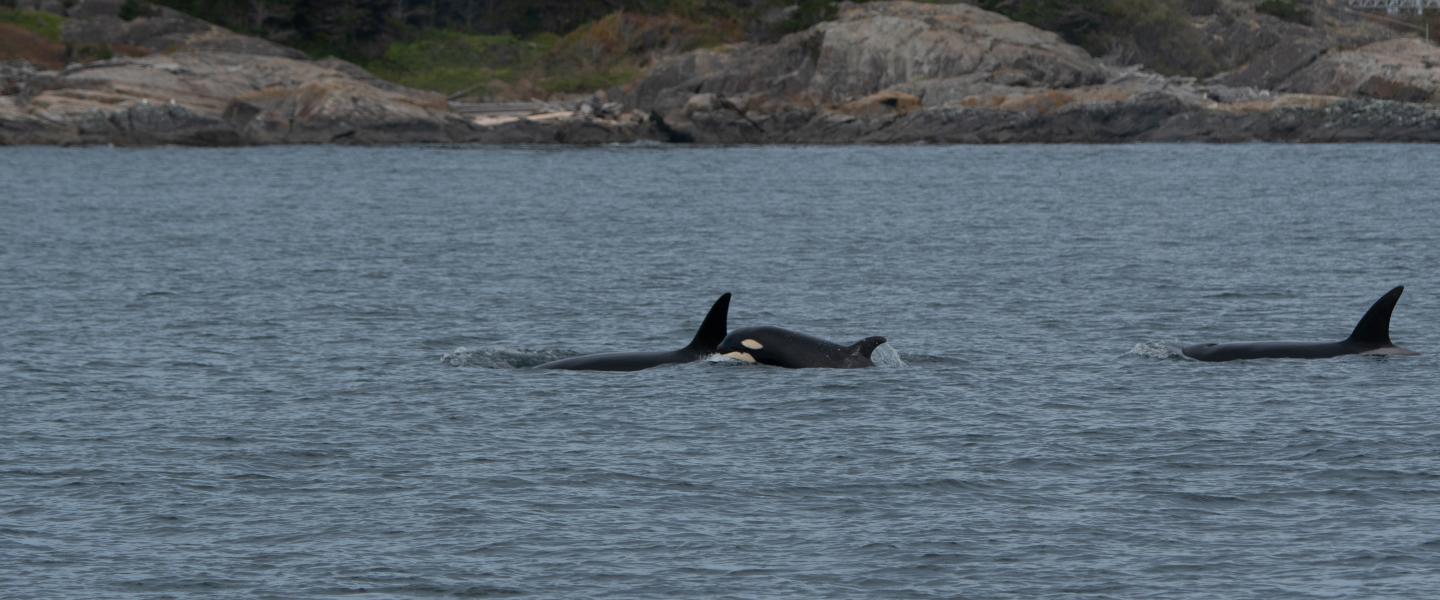
We departed our otter friend and circled back north. There was a report of a group of Bigg’s Killer Whales heading up the west side of San Juan Island. As we made our way up San Juan Channel, we got word the whales had flipped and were heading back down the island. We were already too far to turn around, so our long journey began. We buckled in and made our way over into the Haro Strait. As we cruised down the Haro we passed a shoal of harbor porpoise. These whales were heading southwest, and after crossing over into Canadian waters, we eventually caught up with them near Discovery Island. This family of whales had been identified at the T109A’s. This is a group of 6 orcas, and their individual designations are as follows:
- T109A/Frio/Runaway — female, born in 1990
- T109A4/Garrett— male, born in 2012
- T109A5/Argyle — born in 2014
- T109A6/Riley — female, born in 2018
- T109A7/Wieland — male, born in 2021
- T109A8/Weiss — born in 2025
We came a long way, so we couldn’t stay long, but we got some fantastic looks at this group! Lucky for us, they were at the surface quite a bit. Usually we will see them up for approximately five breaths, and then they will dive for an average of about five minutes. When we first arrived, these whales were at the surface for at least ten to fifteen breaths before they went on their deeper dive. How cool! We waved goodbye to these whales and made our way back east. We made one last stop at Whale Rocks in Cattle Pass to view some Steller’s Sea Lions, and even got to see a bald eagle in the distance. We love getting our community members out on the water, and hope they had a fantastic time exploring the waters that surround their home!
Want to see more photos from our trips? Visit our SmugMug page at: https://sanjuansafaris.smugmug.com/
More information about the Pacific Whale Watch Association: https://www.pacificwhalewatchassociation.com/